

Your master bedroom is more than just a room to park high-end furniture at the end of a chaotic, many-hour day; it is the physical baseline of your daily cognitive and physiological recovery. Within the realm of luxury residential design, spaces are routinely evaluated through the classical metrics of scale, spatial flow, and aesthetic curation.
However, modern environmental psychology introduces a far more critical dimension: the built environment’s immediate neurological impact on human emotion. When dealing with the master suite, the stakes are remarkably high. The aesthetic selections made within this space directly engage your autonomic nervous system, strongly influencing how rapidly your brain waves transition into restorative deep sleep and how effectively your body downregulates chronic stress.
If you find yourself experiencing fitful rest, tossing frequently throughout the night, or waking up with the heavy cognitive load of the previous day’s corporate agenda, the cause may not be your mattress or your schedule at all. Your environment — including the colors surrounding you — plays a larger role than most people realize. By understanding the well-documented relationship between color, lighting, and environmental wellness, you can intentionally transform an uninspired sleeping space into a sophisticated, high-performance sanctuary.
The Neurological Connection Between Space and Stress
To understand the relationship between the colors and ideas in the bedroom and human biology, it is necessary to look closely at the way the brain handles ambient environmental stimuli. The human mind is always scanning the immediate environment for cues of safety or alertness. Bright, busy, high-contrast, or cluttered spaces alert the brain, stimulating the sympathetic nervous system. This is the physiological process behind the “fight-or-flight” response, with increased heart rate, shallow breathing, and increased cortisol production, the main stress hormone.
On the other hand, low-contrast, very harmonious and structurally ordered environments stimulate the parasympathetic nervous system, which controls rest, systemic recovery, and metabolic regulation.
When you cross the threshold of your master suite in the evening, your brain requires an explicit, unmistakable environmental signal that the operational demands of the day have concluded. If your immediate visual field is flooded with chaotic color palettes, aggressive geometric wallpaper, or unorganized spatial flow, your body may stay in an elevated stress state long after you have closed your laptop. This subtle, unconscious biological tension acts as a barrier, preventing your brain from dropping out of light alpha states into deep, slow-wave sleep and critical REM cycles. The result is a persistent state of morning fatigue, regardless of how many hours you spent in bed.
Psychological Profiles: Finding the Best Bedroom Colors
Selecting a master suite color palette goes far deeper than simply pulling a visually pleasing swatch out of a generic paint manufacturer’s fan deck. Color wavelengths possess a direct, measurable physiological impact on your cardiovascular patterns, respiratory rhythms, and neural activity. When curated by an expert hand, the best bedroom colors function as passive, continuous therapeutic elements that actively reduce stress from the exact moment you enter the room.
1. The Architectural Serenity of Muted Blues
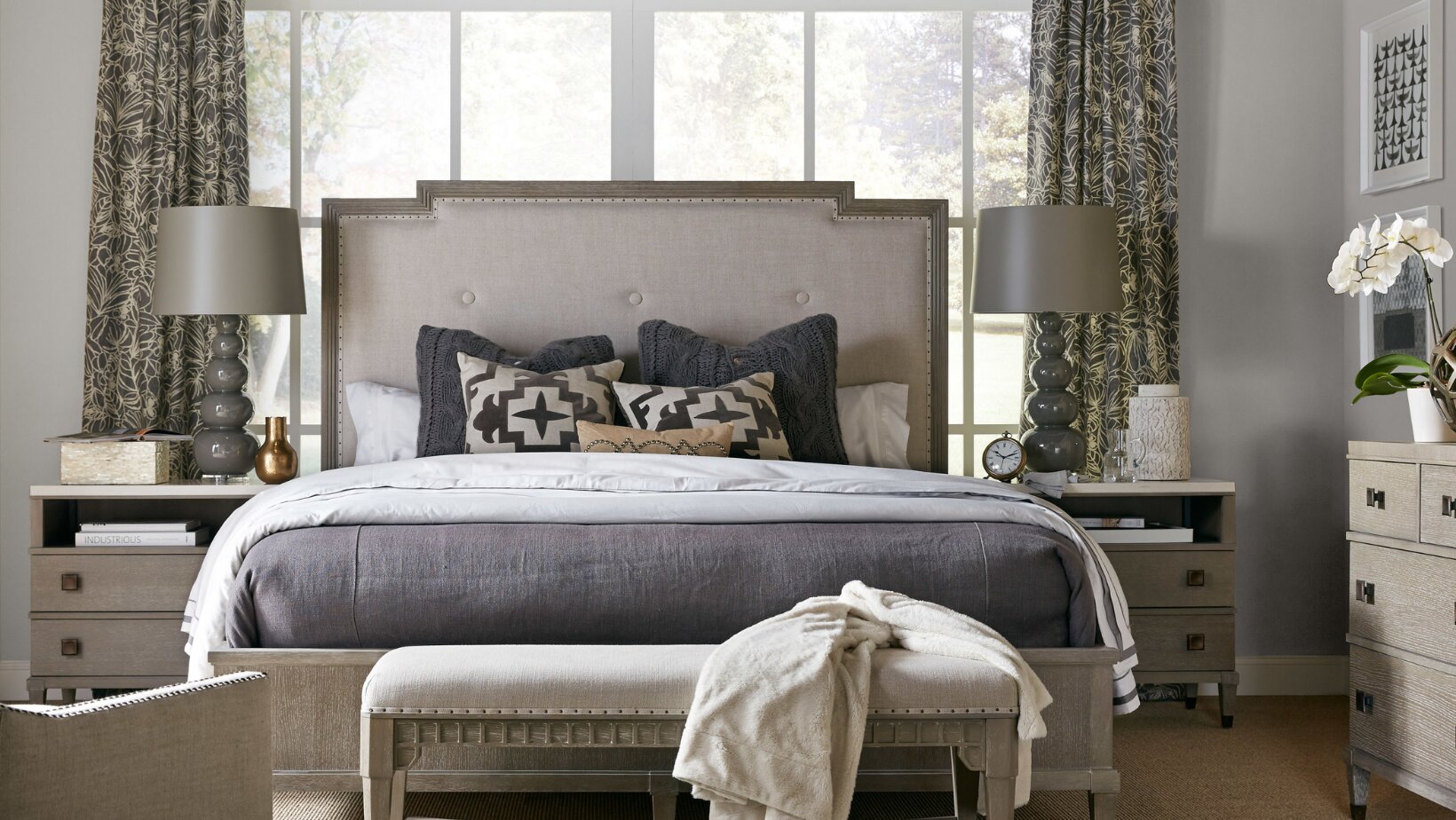
Blue remains the gold standard for restful bedrooms, and the reason has as much to do with perception as with taste. Low-saturation, low-tonality blues are widely associated with lower perceived arousal, and studies on color and mood have linked them to feelings of calm and reduced tension.
- The Palette Selection: Move past stark, icy blues, which can feel uncomfortably cold, clinical, and uninviting under residential lighting. Instead, lean toward highly sophisticated, deeply muted iterations such as slate blue, dusty denim, refined steel gray-blue, or deep, rich navy featuring charcoal undertones.
- The Psychological Impact: These specific tones closely mimic the natural transition from dusk to nightfall, sending a powerful, ancient cue to your internal biological clock that it is entirely safe to unwind.
2. The Restorative Healing of Biophilic Greens
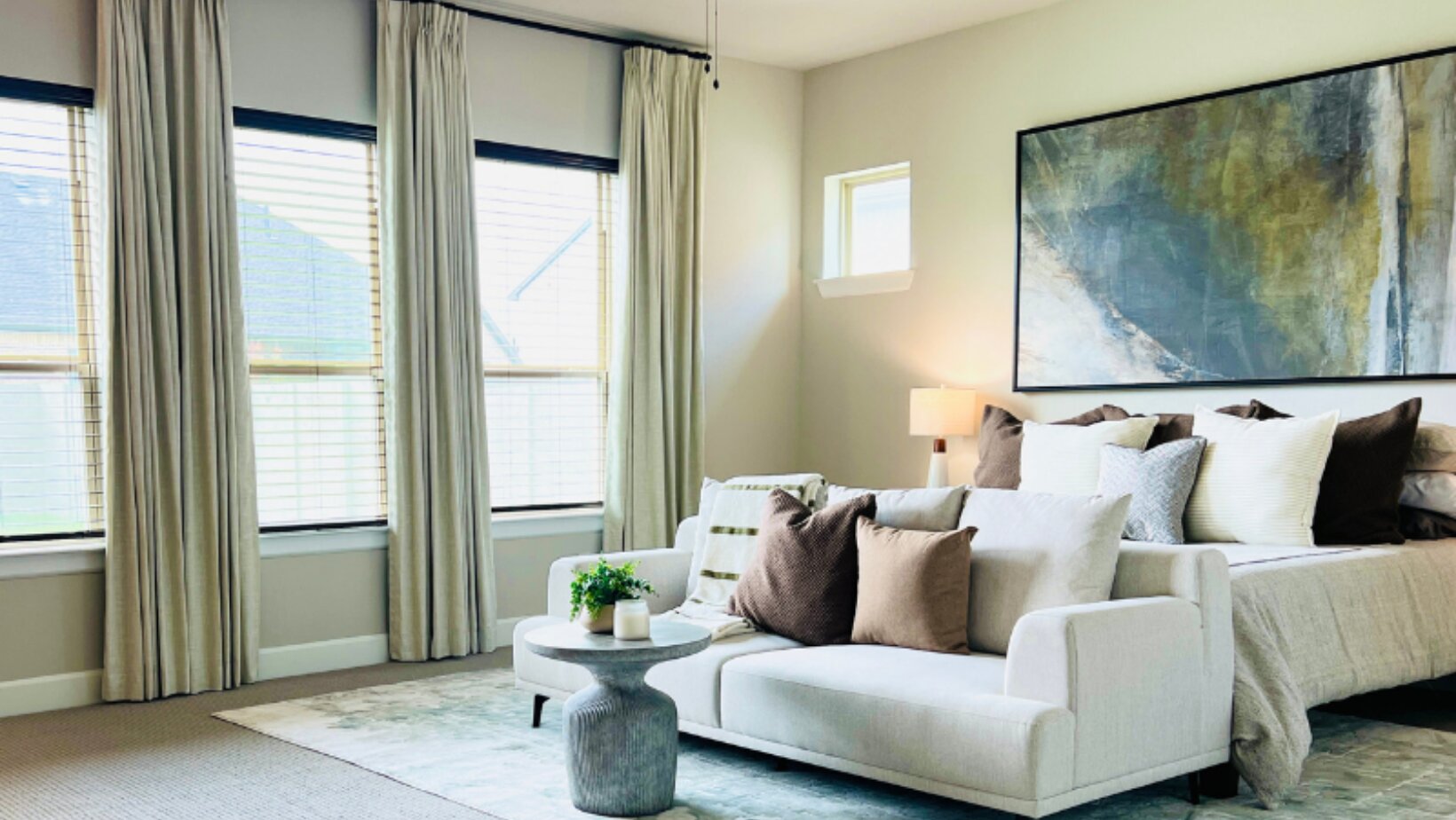
Biophilic design, the deliberate practice of integrating natural outdoor elements into the luxury built environment, stands as one of the most effective, clinically proven methodologies for residential stress reduction. Green sits near the center of the visible light spectrum, where the human eye is most sensitive. Because of this, green tones are often described as restful to look at, requiring less visual effort than colors at either end of the spectrum.
- The Palette Selection: Steer clear of bright, lime, or overly yellow greens that drive cognitive activity. Focus instead on rich, grounding options like muted sage, deep olive, soft eucalyptus, and organic moss greens that feature sophisticated gray bases.
- The Psychological Impact: Soft greens ground an interior, subtly evoking feelings of security, renewal, and organic calm. They are exceptionally beneficial for corporate leaders, founders, and fast-paced professionals who must transition rapidly from intense, high-stakes daytime environments to absolute cognitive stillness.
3. The Enveloping Comfort of Refined Warm Neutrals
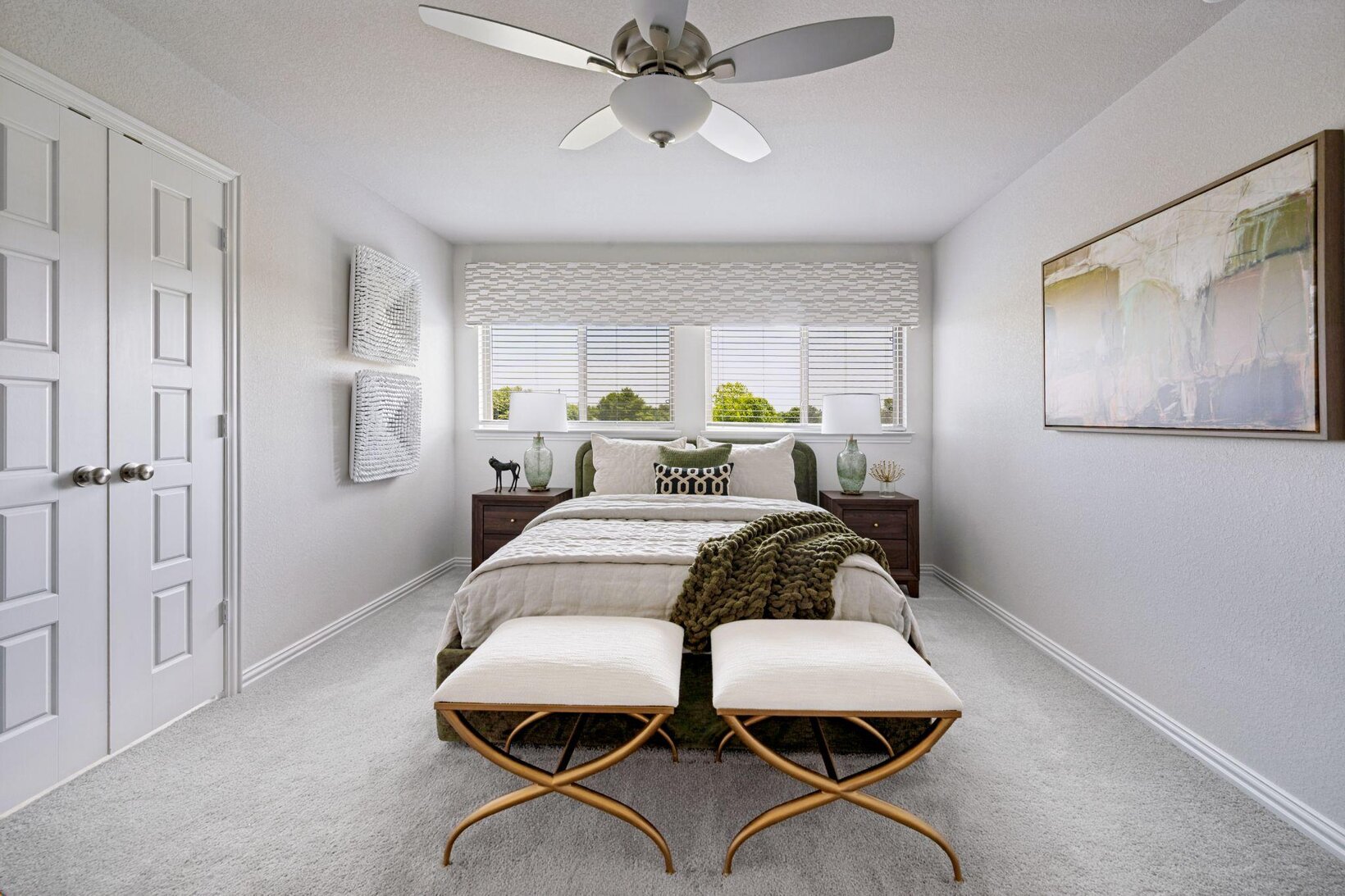
For individuals who find distinct color choices visually distracting, a monochromatic, layered neutral strategy delivers an exceptionally luxurious, resort-grade interior experience. The critical rule when deploying neutrals is the absolute avoidance of stark, reflective, or clinical whites. Bright whites reflect more ambient light around the space, which can make a room feel more visually active in the evening when you are trying to wind down.
- The Palette Selection: Focus your design on rich, warm alabasters, deep taupes, cashmere grays, soft mushroom tones, and velvety chamois.
- The Psychological Impact: A layered, exceptionally low-contrast neutral palette removes all visual noise from your field of vision. It functions as a calming blank canvas for an overstimulated mind, allowing your racing thoughts to settle smoothly without getting caught on high-contrast focal points.
Surface Physics: Selecting Bedroom Colors for Walls
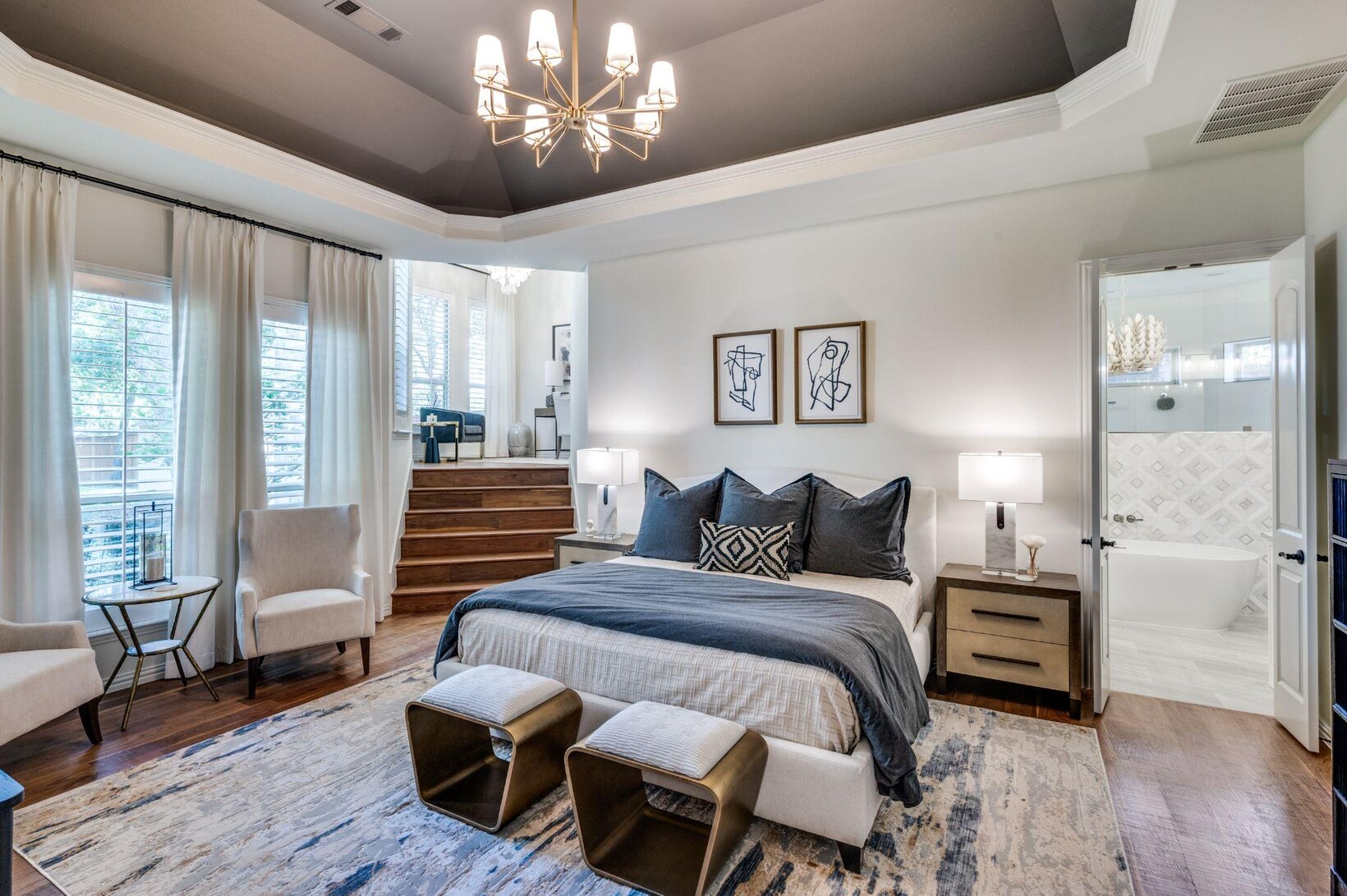
Because the sheer surface area of your walls constitutes the single largest visual component of your master suite, choosing specific bedroom colors for walls requires a deep understanding of light absorption, undertone theory, and paint finish chemistry.
| Palette Classification | Precision Undertone | Recommended Finish | Target Physiological Effect |
|---|---|---|---|
| Muted Slate / Deep Indigo | Ash, Soft Charcoal | Premium Flat / Matte | Slows respiratory rates, emulates natural twilight |
| Sage / Olive Grove | Warm Umber, Light Earth | Velvet / Chalky Flat | Minimizes ocular muscle fatigue, stabilizes mood |
| Taupe / Luxury Cashmere | Warm Cream, Soft Ochre | Ultra Matte | Vaporizes visual clutter, amplifies spatial warmth |
| Ink / Velvet Obsidian | Midnight Blue, Deep Smoke | Flat | Creates a protective, dark cocooning environment |
The Critical Importance of Paint Finish Physics
An architectural detail that is frequently botched in amateur, DIY design projects is the selection of the paint sheen. For a better-performing, optimized master bedroom, you must strictly specify a flat, ultra-matte, or chalky finish. Gloss, or even standard satin finishes, catch ambient light from windows, streetlights, and bedside reading lamps, creating sharp reflections and specular glare.
This glare acts as a visual pollutant, forcing your pupils to constantly adjust and stimulating cognitive alertness. A true matte finish scatters light diffusely rather than reflecting it back in a sharp, mirror-like way. This softens the physical contours of the room, casting smooth, velvet-like transitions across your architectural surfaces, which beautifully tricks the brain into entering a deeply relaxed state.
Advanced Circadian Lighting Architecture
Even the most precisely mixed, psychologically optimized paint colors will completely fail to lower your stress levels if they are subjected to an outdated, poorly engineered lighting plan. To construct a master suite that actively repairs your sleep hygiene, your artificial light must seamlessly adapt to the natural progression of astronomical time.
Eliminating Direct Overhead Glare
The classic residential design mistake is relying on a centralized, blazing overhead light fixture. Lying flat on your back in bed and looking directly up into an exposed, glaring bulb sends a strong wakefulness signal to your brain. Bright overhead light in the evening can suppress melatonin production and push your internal clock later.
Tactile Layering and Acoustic Insulation Strategies
Once your foundational wall colors are flawlessly applied, the textile elements you layer into the room must work in tandem with the surfaces. In luxury master suites, texture functions as a silent, powerful sensory anchor. It injects vital depth, dampens acoustic pollution, and builds an inviting physical experience that immediately coaxes your physical body out of stress mode.
The Tonal Fabric Palette Principle
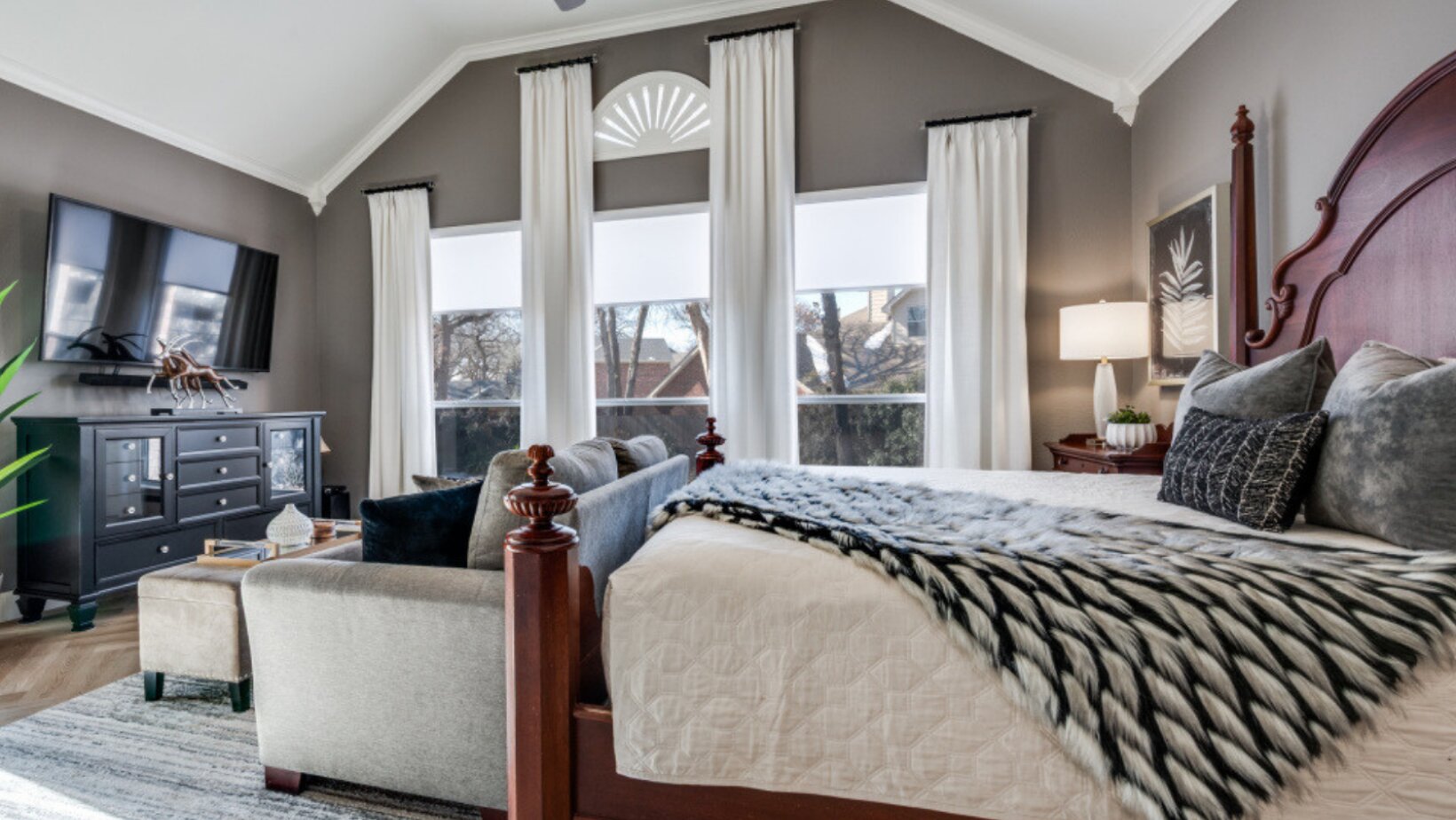
Introducing heavy, contrasting patterns such as a stark geometric navy-and-white duvet or aggressive floral prints keeps the human brain awake by forcing it to subconsciously track shapes. To successfully drop your stress levels, your textiles must rest comfortably within a very narrow, monochromatic range of your wall tones.
By deliberately combining materials with distinct tactile profiles such as heavily washed French linen sheets, matte silky pillowcases, textured coverlets, and furry throws, you construct an exceptionally luxurious, high-end design without introducing an ounce of stress-inducing visual noise.
Turning the Bedroom into an Acoustic Vault
The task of stress reduction is deeply sensory: visual quietude is as important as sound insulation. Hardwood floors, minimal window coverings, and exposed drywall create an acoustic echo chamber that magnifies subtle house noises, HVAC hums, and outside traffic. To shut out these disturbing elements, bring in heavy, absorbing fabrics:
- Interlined Custom Drapery: For maximum sound absorption and light control, your draperies must be lined with a dense flannel interlayer between the face fabric and blackout lining. It forms a thick thermal and acoustic barrier that muffles street noise and blocks intrusive dawn light.
- Architectural Upholstered Headboards: A dramatic visual focal point and a very effective sound baffle come from an oversized, custom upholstered headboard or a fabric-wrapped wall panel behind the bed.
- Plush High-Density Underfoot Underlays: Installing a big, thick area rug on top of your structural flooring will soak up foot-traffic sound waves, creating a silent, whisper-quiet atmosphere.
Structural Layout: Engineering an Environment Free from Friction
The spatial arrangement of your bedroom furniture shapes your morning and evening habits far more than you realize. When a layout is poorly conceived, it injects subtle micro-frustrations into your daily patterns, nudging your stress levels upward right before bed.
The Subconscious Safety of Visual Symmetry
From a purely evolutionary perspective, symmetry indicates environmental predictability, order, and safety to the human brain. When a bed is awkwardly shoved against a corner wall, or when mismatched nightstands create a jarringly uneven visual weight, the subconscious mind registers the room as chaotic and unstable. Position your bed as the undisputed architectural anchor of the master suite, flanked by perfectly balanced nightstands and identical lighting fixtures to instill an unshakeable sense of calm and visual balance.
Hiding the Digital Workspace
The unmitigated encroachment of digital work tools into the bedroom is one of the single greatest contributors to modern corporate sleep deprivation. Looking at a computer monitor, a docking station, or a web of messy charging cords while resting in bed forces your brain to remain tethered to your daytime performance metrics.
- Architectural Enclosures: If your square footage dictates that a home office zone must exist within the master suite, use custom, built-in millwork featuring sleek pocket doors. This allows you to completely slide the doors shut, hiding your workspace entirely before you begin your nightly routine.
Design Faults That Trigger Chronic Fatigue
Even the most beautiful, high-end bedroom spaces can harbor subtle design mistakes that quietly sabotage your rest and amplify mental tension.
The Aggressive Accent Wall Misstep
A popular design trend that routinely backfires in master suites is the contrasting accent wall — such as painting a single, bold charcoal or navy wall behind the headboard while leaving the remaining three walls a stark, bright white. This creates incredibly sharp, high-contrast geometric lines where the walls meet.
Your eyes are naturally drawn to these sharp transitions, forcing your visual cortex to work harder to accurately map the boundaries of the space. To cultivate a deeply soothing environment that encourages cognitive downregulation, drop the accent wall strategy completely. Wrap the entire room in a cohesive, unified, and enveloping tone to soften all structural boundaries.
Visible Visual Clutter and Open Storage
Clutter represents an unfinished task to your subconscious mind. Looking out at a crowded wardrobe, exposed shelving packed with accessories, or overflowing dresser tops keeps your brain in an active state of management and sorting. Prioritize sleek, entirely closed storage cabinetry that tucks possessions away behind uniform doors, allowing your eyes to glide across the room without encountering a single visual interruption.
Conclusion: Establishing an Investment in Rest
Ultimately, a master bedroom should never be designed simply to impress a visitor; it must be precisely engineered to restore your mental and physical peace. By choosing to implement the best bedroom colors, masterfully layering your tactile fabrics, and optimizing your architectural lighting placement, you establish an effective environmental buffer against the high-stress demands of your professional lifestyle.
Partnering with professional interior design experts streamlines this entire journey, completely removing the decision fatigue, incorrect undertone pairings, and functional layout mistakes that plague DIY projects. When you build a master suite anchored firmly in empirical color theory and environmental wellness psychology, you are not merely redecorating a room; you are making a permanent, life-changing investment in your health, clarity, and daily focus.